
Type SL Puppets. The image is from the 1974 sales catalogue. Hansel & Gretel first appeared in 1954. These versions of Pinocchio and Geppetto (not Disney,) were introduced to the range in 1962.

Type SL puppets. All four characters were in production from the early 1950s. The earlier versions looked quite different to the ones pictured here and I will add photos to this page of the 1950s versions later.

Type SL puppets. The puppets featured here are from the range of new characters introduced in 1963. For more information about these characters visit the “1963 Range” page on this website.

Type SL Puppets. Red Riding Hood is shown with a red apron here, although by November 1975 she had her cape returned. The other three characters are from the “1963 Range.”

Type SL Puppets. This image from the 1966 postcard size, sales catalogue include Pinky & Perky in this range. Later, they were listed in the SS Range. Bimbo (not “baby Bimbo,”) was now included in the SL range along with the Disjointing Skeleton.
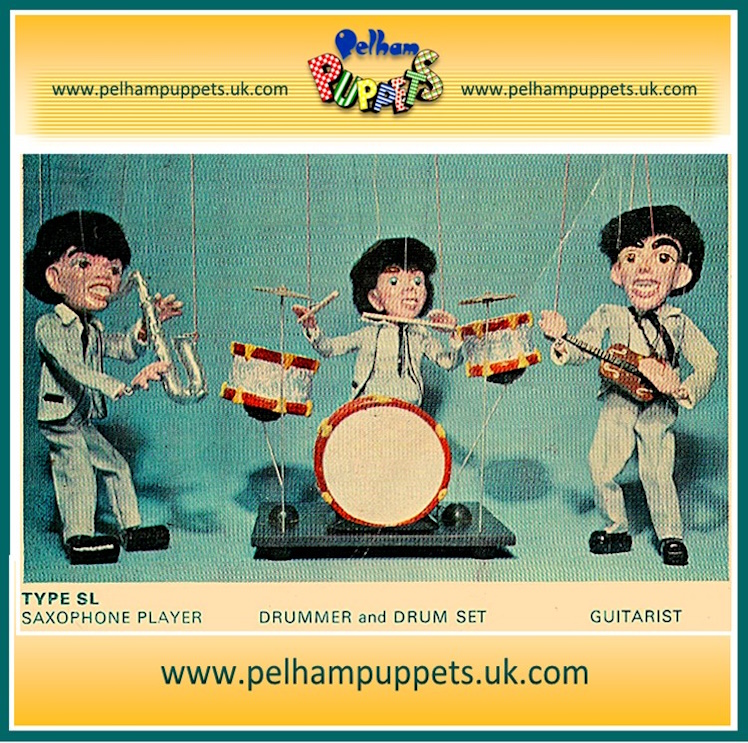
Type SL puppets. Three pop singers, (called the “Pelpoppets”) first appeared in 1964 and were often mistaken for the Beatles because of their grey suits and ‘mop-tops,’ but “PELPOP” stated that they were simply “modern-day types.” The drum kit was sold separately.

Type SL puppets. The pop singers. To keep up to date with fashion trends at the time, the pop singer puppets had a change of hair style and clothes. This set reflected the “Carnaby Street” and “flower power” fashion trends of the mid to late 1960s and the “glam-pop” era of the early 1970s with very colourful fabrics.

Type SL puppets. The pop singers (part 3). By the late 1970s although the pop singers remained in production, demand for these characters declined. Only two head moulds were used with the drummer having the same head as the guitarist and the drum kit was supplied as an unpainted kit.

Type SL puppets. Clever Willie and the Snake Charmer. Both of these characters had been out of production for a number of years, Clever Willie for about two years and the Snake Charmer for about five years, although they were both reintroduced in December 1974.

Type SL puppets. As with Clever Willie and the Snake Charmer, sales of the Elephant and the Old man, introduced in 1963, had fallen, considerably by the early 1970s and both were taken out of production but reintroduced by the end of 1979.


